

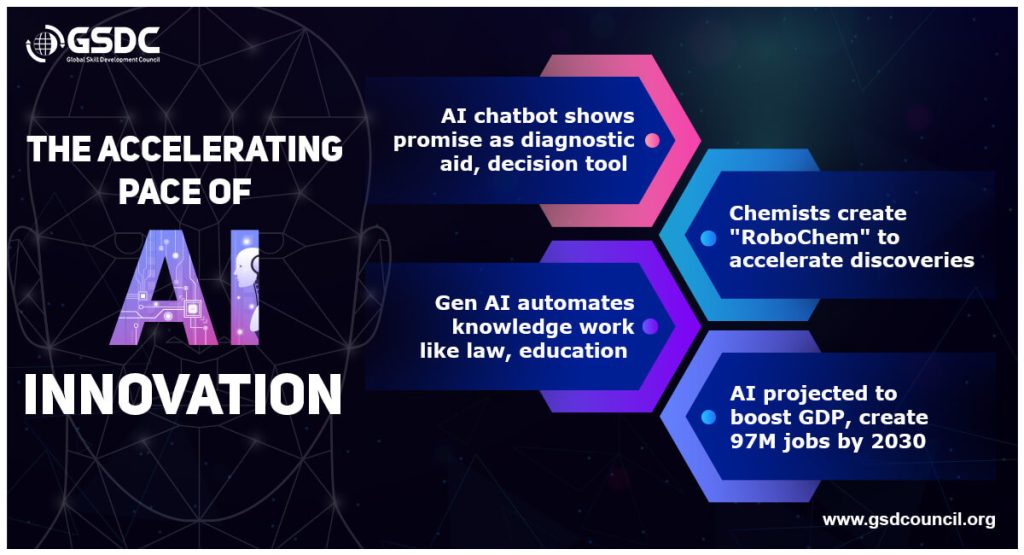
Technology companies across the globe are rapidly accelerating artificial intelligence innovation, driving a new wave of digital transformation that is reshaping industries, economies, and everyday life. From advanced machine learning models to large-scale cloud AI infrastructure, global firms are competing to develop faster, smarter, and more efficient systems. This acceleration is not only improving productivity but also redefining how businesses build products, deliver services, and interact with users worldwide.
Global AI Research Expansion
Large-Scale Model Development
Tech companies are investing heavily in building large AI models trained on massive datasets. These models improve accuracy, enhance reasoning abilities, and support complex applications across industries such as healthcare, finance, and communication systems.
Open AI Research Collaboration
Organizations are increasingly sharing research findings to accelerate innovation. Collaborative efforts between companies and academic institutions help improve model transparency, reduce duplication, and speed up technological breakthroughs.
Specialized Industry AI Models
Instead of general-purpose systems, companies are now developing AI tailored for specific industries. These specialized models deliver higher precision and better performance for tasks in law, medicine, and engineering.
Faster Training Infrastructure
Advances in computing hardware and distributed systems allow AI models to be trained faster than ever before. This reduces development cycles and enables quicker deployment of new solutions.
Global Talent Investment
Tech firms are expanding AI research teams by hiring experts worldwide. This global talent pool enhances creativity and drives more innovative solutions in artificial intelligence development.
Cloud-Based AI Acceleration
Scalable AI Platforms
Cloud providers now offer scalable AI services that allow businesses to access powerful models without building infrastructure. This democratizes AI usage and speeds up adoption across industries.
Real-Time Data Processing
Cloud systems enable instant processing of large datasets, allowing AI models to deliver real-time insights for decision-making in business and consumer applications.
Distributed Computing Networks
AI workloads are distributed across global data centers, improving efficiency and reducing latency for users regardless of location.
AI-as-a-Service Models
Companies now provide AI tools as subscription-based services, making advanced technology accessible to startups and small businesses.
Secure Cloud Infrastructure
Enhanced security protocols ensure that AI systems running in the cloud remain protected against cyber threats and unauthorized access.
AI Integration in Business Operations
Automated Workflow Systems
Businesses use AI to automate repetitive tasks such as data entry, scheduling, and reporting, increasing operational efficiency.
Intelligent Decision Platforms
AI-powered dashboards provide real-time analytics that help executives make faster and more informed business decisions.
Customer Experience Personalization
Companies use AI to analyze user behavior and deliver personalized recommendations, improving customer satisfaction and engagement.
Predictive Business Analytics
AI models forecast market trends and customer demand, helping businesses prepare for future changes and reduce risk.
Smart Resource Management
AI optimizes resource allocation, ensuring that time, labor, and materials are used efficiently across operations.
AI in Consumer Technology
Smart Device Integration
Tech companies are embedding AI into smartphones, home devices, and wearables to enhance user convenience and automation.
Personalized Digital Assistants
AI assistants now offer highly customized support based on user behavior, improving productivity and daily task management.
Content Recommendation Engines
Streaming and social platforms use AI to suggest content tailored to individual preferences and viewing habits.
Enhanced User Interfaces
AI-driven interfaces adapt dynamically to user needs, making digital experiences more intuitive and accessible.
Voice and Vision Technologies
Advancements in voice recognition and computer vision allow users to interact with devices more naturally and efficiently.
AI in Industrial Transformation
Smart Manufacturing Systems
Factories are adopting AI-powered automation to improve production speed, quality control, and operational efficiency.
Predictive Maintenance Solutions
AI detects equipment issues before failures occur, reducing downtime and maintenance costs in industrial environments.
Supply Chain Optimization
AI improves logistics planning by forecasting demand and optimizing delivery routes for faster and more efficient distribution.
Robotics and Automation Integration
Industrial robots powered by AI perform complex tasks with precision, increasing productivity and reducing human workload.
Quality Assurance Systems
AI-based inspection tools ensure consistent product quality by detecting defects during manufacturing processes.
AI in Healthcare Advancement
Diagnostic Imaging AI
AI systems analyze medical images to detect diseases early and with higher accuracy, improving patient outcomes.
Remote Patient Monitoring
Healthcare providers use AI-enabled devices to track patient health conditions in real time outside hospitals.
Personalized Treatment Plans
AI helps design customized treatment strategies based on individual patient data and medical history.
Drug Development Acceleration
AI shortens pharmaceutical research timelines by predicting molecular behavior and testing drug effectiveness virtually.
Hospital Workflow Optimization
AI improves hospital operations by managing patient flow, scheduling, and resource allocation efficiently.
AI Future Innovation Trends
Artificial General Intelligence Research
Companies are working toward AI systems capable of human-like reasoning and decision-making across multiple domains.
Autonomous Digital Ecosystems
Future AI systems will manage entire digital environments with minimal human intervention, improving efficiency and scalability.
Sustainable AI Development
Tech firms are focusing on energy-efficient AI models to reduce environmental impact and improve sustainability.
Human-AI Collaboration Models
Future workplaces will rely heavily on collaboration between humans and AI to maximize productivity and creativity.
Global AI Governance Systems
Efforts are increasing to create international regulations ensuring safe, ethical, and responsible AI development worldwide.
FAQ Section
Why are tech companies accelerating AI innovation?
They aim to improve efficiency, competitiveness, and global digital transformation.
How does AI impact businesses globally?
AI enhances automation, decision-making, and customer experience across industries.
Is AI development happening worldwide?
Yes, companies across many countries are actively advancing AI technologies.
What industries benefit most from AI?
Healthcare, finance, manufacturing, retail, and technology sectors benefit significantly.
Will AI continue to grow in the future?
Yes, AI is expected to expand rapidly with more advanced and intelligent systems.
Conclusion
Tech companies are accelerating AI innovation worldwide, driving rapid transformation across industries and digital ecosystems. Through advancements in cloud computing, automation, and intelligent systems, AI is becoming a central force in global progress. As innovation continues, it will reshape economies, enhance productivity, and redefine the future of human technology interaction.