

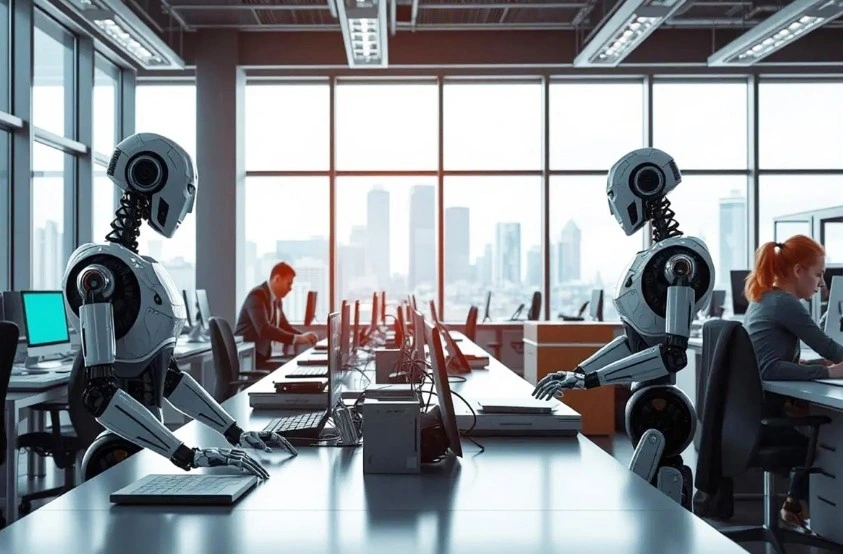
Artificial Intelligence is no longer just an emerging technology—it has become a powerful force reshaping how global industries operate, compete, and innovate. Recent breakthroughs in machine learning, generative models, and intelligent automation are transforming everything from healthcare to manufacturing. Businesses are now leveraging AI to improve efficiency, reduce costs, and unlock new levels of productivity that were previously impossible, marking a major shift in the global digital economy.
Advanced Machine Learning Breakthroughs
Deep Neural Network Expansion
Modern AI systems use deep neural networks to process vast amounts of data with improved accuracy. These advanced architectures help machines recognize complex patterns, enabling smarter decision-making in industries such as finance, healthcare, and logistics with greater speed and reliability.
Self-Learning Algorithms
AI models now improve themselves through continuous exposure to new data. This self-learning capability reduces the need for manual updates and allows systems to adapt quickly to changing environments, improving long-term performance across multiple applications.
Transfer Learning Advancements
Transfer learning enables AI systems to apply knowledge gained from one task to another. This reduces training time and improves efficiency, making AI deployment faster and more cost-effective for businesses across different sectors.
Reinforcement Learning Systems
AI uses reinforcement learning to improve performance through trial and error. These systems are widely used in robotics, gaming, and automation, where continuous improvement leads to more accurate and optimized outcomes over time.
Scalable Model Training
Breakthroughs in distributed computing allow AI models to be trained on massive datasets. This scalability ensures better accuracy and enables the development of more powerful and complex intelligent systems.
AI in Healthcare Transformation
Precision Disease Diagnosis
AI systems analyze medical data to detect diseases earlier and more accurately. This improves treatment outcomes and supports doctors in making faster, more informed decisions for patients.
AI-Assisted Surgery
Robotic systems powered by AI assist surgeons during complex procedures. These technologies increase precision, reduce risks, and enhance recovery times for patients undergoing surgery.
Predictive Health Analytics
Healthcare providers use AI to predict potential illnesses based on patient history and lifestyle data. This enables preventive care and reduces long-term healthcare costs.
Drug Discovery Acceleration
AI significantly speeds up pharmaceutical research by simulating molecular interactions. This reduces development time and helps bring new medicines to market faster.
Personalized Treatment Systems
AI tailors treatments based on individual genetic and medical profiles, improving effectiveness and minimizing side effects for patients worldwide.
AI Revolution in Manufacturing
Smart Factory Automation
AI-driven factories use intelligent machines to automate production processes. This increases efficiency, reduces human error, and enhances overall output quality.
Predictive Maintenance Systems
Manufacturers use AI to predict equipment failures before they occur. This minimizes downtime and reduces maintenance costs significantly.
Quality Control Intelligence
AI systems inspect products in real time using computer vision. This ensures consistent quality and reduces defective output in production lines.
Supply Chain Optimization
AI improves logistics by predicting demand and optimizing inventory management. This helps companies reduce waste and improve delivery efficiency.
Robotics Integration
Industrial robots powered by AI perform repetitive tasks with high precision. This improves productivity and allows human workers to focus on complex operations.
AI in Financial Industry Growth
Algorithmic Trading Systems
AI analyzes market trends and executes trades automatically at optimal times. This increases profitability and reduces human emotional bias in financial decisions.
Fraud Detection Models
Financial institutions use AI to detect suspicious transactions in real time. This protects customers and reduces financial losses caused by fraud.
Credit Risk Analysis
AI evaluates creditworthiness using diverse data sources. This improves lending accuracy and expands financial access to more individuals.
Automated Banking Services
Chatbots and virtual assistants handle customer banking requests efficiently. This enhances customer experience and reduces operational costs for banks.
Investment Strategy Optimization
AI helps investors make better decisions by analyzing market patterns and forecasting trends, improving long-term portfolio performance.
AI in Retail and E-Commerce
Personalized Shopping Experiences
AI recommends products based on user preferences and browsing behavior. This increases customer satisfaction and boosts sales conversion rates.
Inventory Demand Forecasting
Retailers use AI to predict product demand accurately. This reduces overstocking and ensures better inventory management.
Smart Pricing Systems
AI adjusts product prices dynamically based on market conditions and demand. This helps businesses maximize revenue and competitiveness.
Customer Behavior Analytics
Retailers analyze consumer behavior to understand buying patterns. This improves marketing strategies and customer targeting.
Automated Customer Support
AI chatbots handle customer inquiries instantly, improving service efficiency and response times across online platforms.
AI in Transportation and Mobility
Autonomous Vehicle Systems
Self-driving technology uses AI to navigate roads safely. This reduces accidents and transforms the future of transportation.
Traffic Flow Optimization
AI manages traffic signals and routes based on real-time conditions, reducing congestion in urban areas.
Smart Logistics Networks
AI improves delivery systems by optimizing routes and reducing fuel consumption, increasing efficiency in supply chains.
Ride-Sharing Intelligence
Platforms use AI to match drivers and passengers efficiently, reducing wait times and improving service quality.
Predictive Vehicle Maintenance
AI monitors vehicle health and predicts maintenance needs, preventing breakdowns and improving safety.
AI in Education and Learning Systems
Adaptive Learning Platforms
AI personalizes education based on student performance. This improves learning outcomes and engagement.
Intelligent Tutoring Systems
Virtual tutors provide personalized guidance and explanations, supporting students anytime and anywhere.
Automated Assessment Tools
AI evaluates assignments quickly and accurately, reducing teacher workload and improving grading consistency.
Skill-Based Learning Models
AI identifies student strengths and weaknesses to recommend targeted learning paths.
Virtual Classroom Enhancements
AI improves online education through interactive tools and real-time feedback systems.
AI Future Global Impact
Artificial General Intelligence Research
Scientists are working toward AI systems that match human reasoning abilities, representing the next major breakthrough.
AI-Powered Global Connectivity
AI enhances communication systems, enabling faster and more efficient global interactions.
Sustainable AI Development
Efforts are being made to reduce energy consumption in AI systems for environmental sustainability.
Human-AI Collaboration Models
Future workplaces will rely on collaboration between humans and AI systems for higher productivity.
Fully Autonomous Industries
AI will eventually manage entire industrial ecosystems with minimal human intervention, transforming global economies.
FAQ Section
What is driving AI breakthroughs today?
Advances in computing power, data availability, and machine learning algorithms are driving progress.
Which industries benefit most from AI?
Healthcare, finance, manufacturing, retail, and transportation benefit significantly from AI innovations.
Is AI replacing human workers?
AI automates tasks but also creates new job opportunities in technology-driven fields.
How does AI improve efficiency?
It automates processes, analyzes data faster, and reduces human error across industries.
What is the future of AI?
AI will become more autonomous, intelligent, and deeply integrated into global systems.
Conclusion
Artificial Intelligence breakthroughs are transforming global industries by improving efficiency, decision-making, and innovation. From healthcare to transportation, AI is reshaping how systems operate and evolve. As technology continues to advance, AI will remain a driving force behind global progress, creating smarter industries and more connected economies worldwide.